Locro-licious Immigration Nation

Locro-Licious!

One of the most surprising elements of this trip to me was the wealth of food culture that could be found in the city. During my trip I ate foods from Armenia, India, Uruguay, the U.S., Morocco, France, Italy, Spain, and certainly more that I cant recall anymore.

This is most easily explained by Argentina’s long history as an immigrant nation. Nation’s with very high levels of immigrants have some marked differences between themselves and nations without such strong immigration. This is most easily witnessed in the food culture. There are distinct locations selling one countries food, but there are also restaurants specializing in fusing the cuisines of various countries. I Latina serves a seven course menu with each course hailing from a different Latin American country. The local Moroccan restaurant specializes in moroccan style meats served in a shawarma style wrap. French style pastries, Italian espresso, and Argentinian milanesas all go hand in hand at any old style Argentine eatery.

To me, all of these advancements in food represent the merits of an immigrant nation over one with more ethno-nationalist tones. This is extremely important in an era where so many political movements across the world demonize the immigrants and hail their effects on a nation as solely negative. An immigrant nation is able to draw on the best elements of all the cultures that make up their population to make something much much better than the sum of its parts. This is something Buenos Aires, New Orleans, Mexico City, and Los Angeles all share. All these cities have huge immigrant populations, have incredible cuisines, and are considered amazing places to visit because of their vast and interesting cultures.

Delicious Cotton Candy!
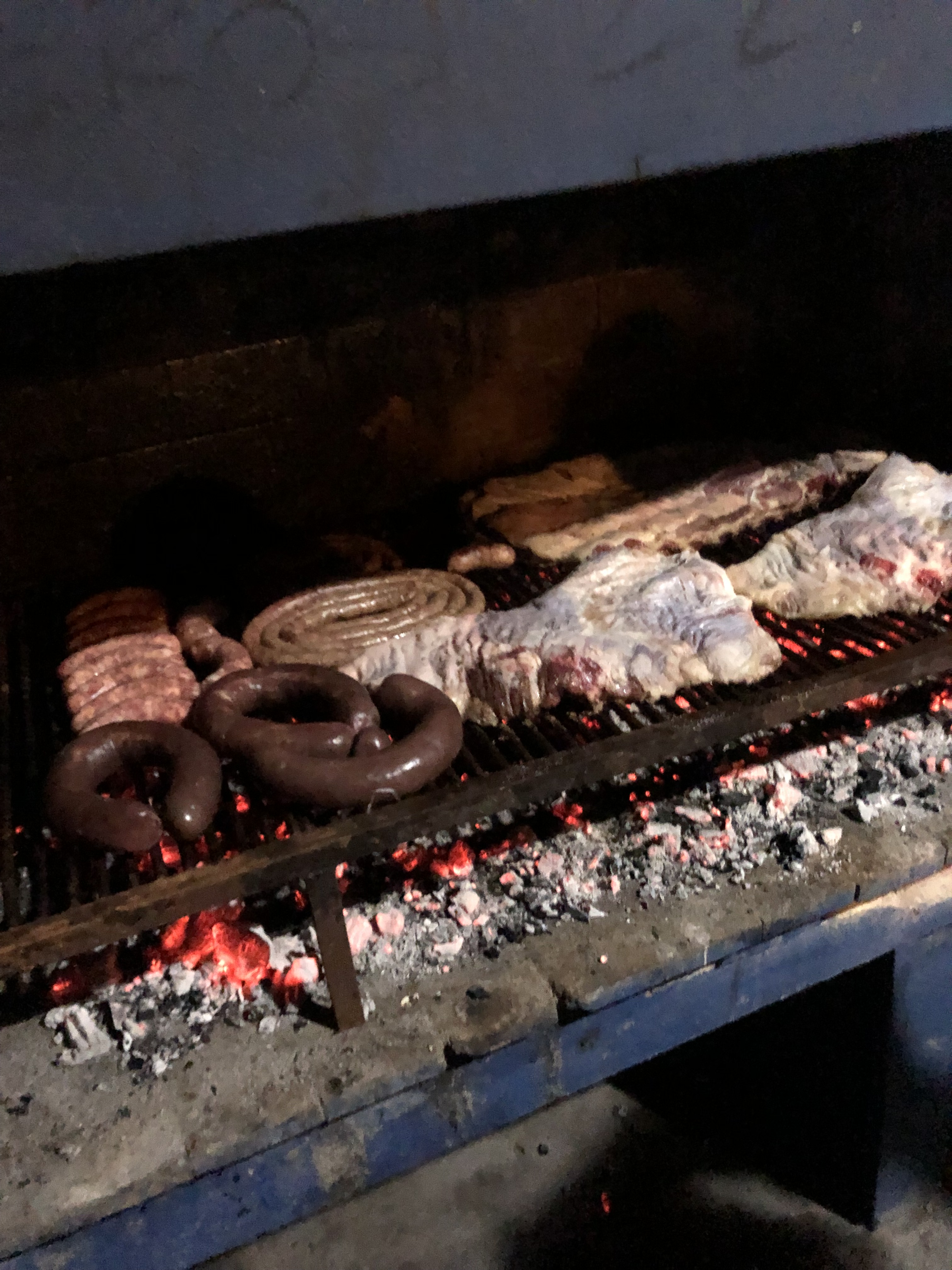
Regional Specialty: Asado
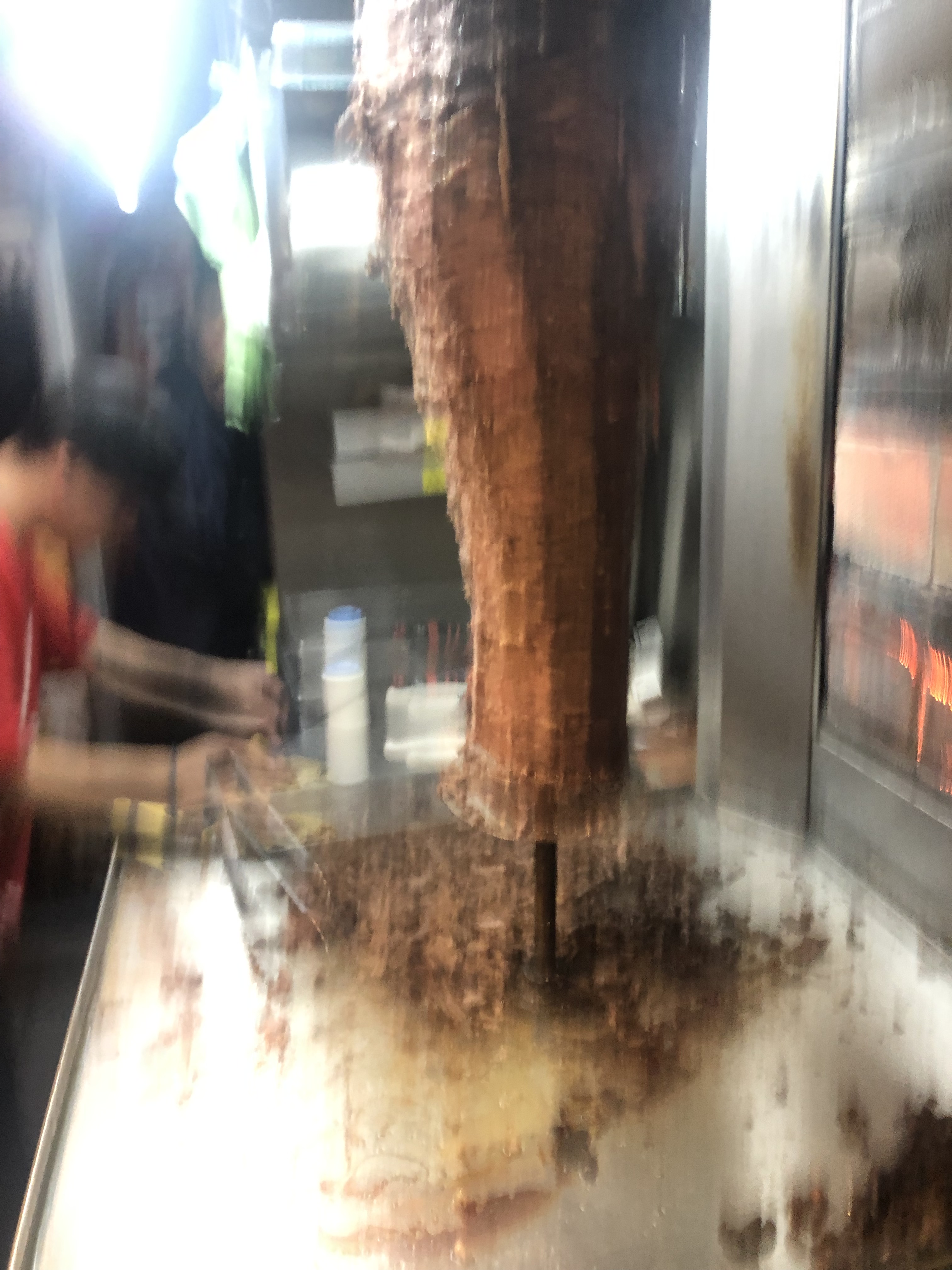
My Favorite Thing in the Entire World: Shawarma
Artisanal Cocktails
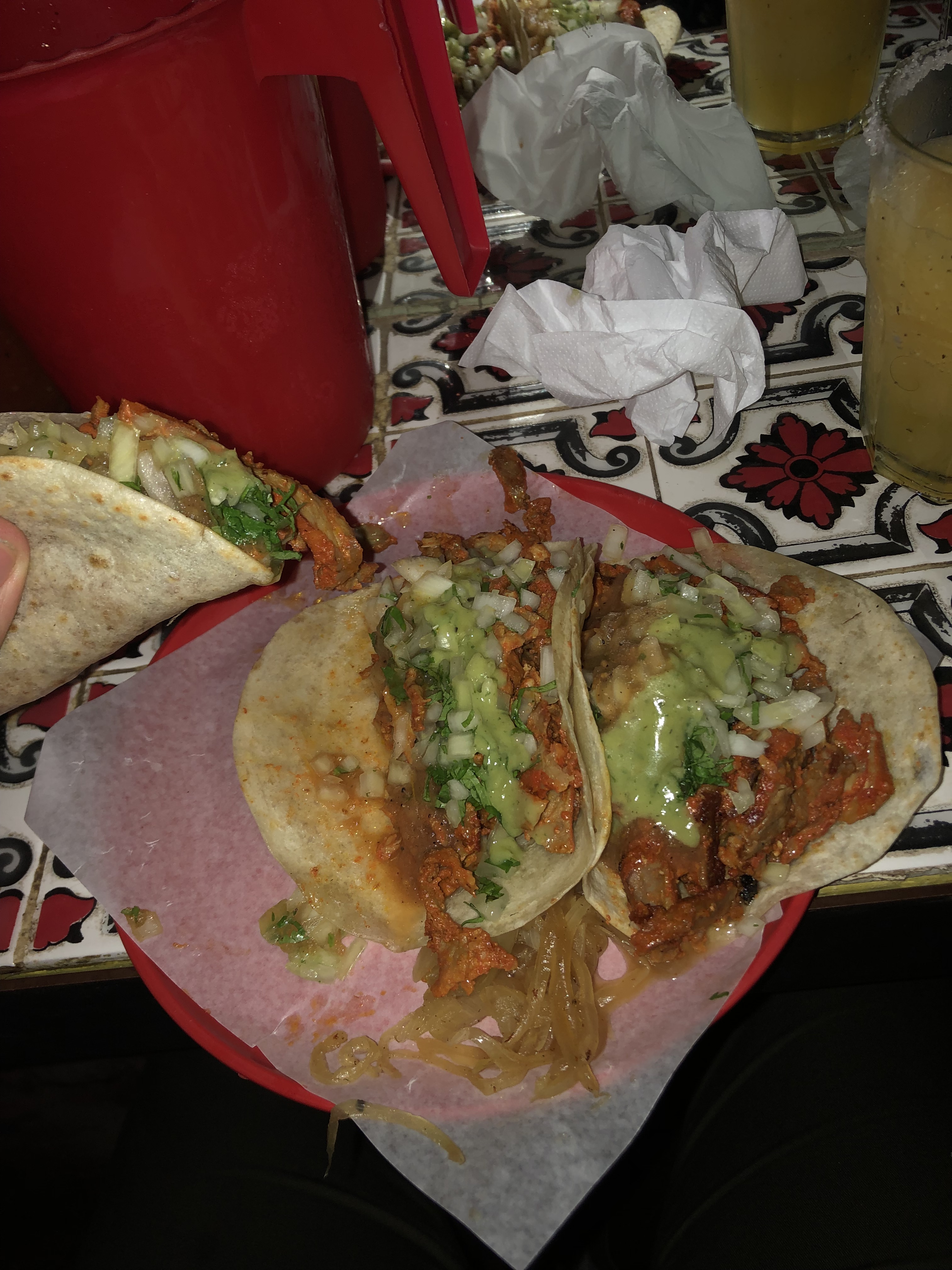
AL PASTORRRRRR

¡Mezcal Mexicano!

Gentrification Nation

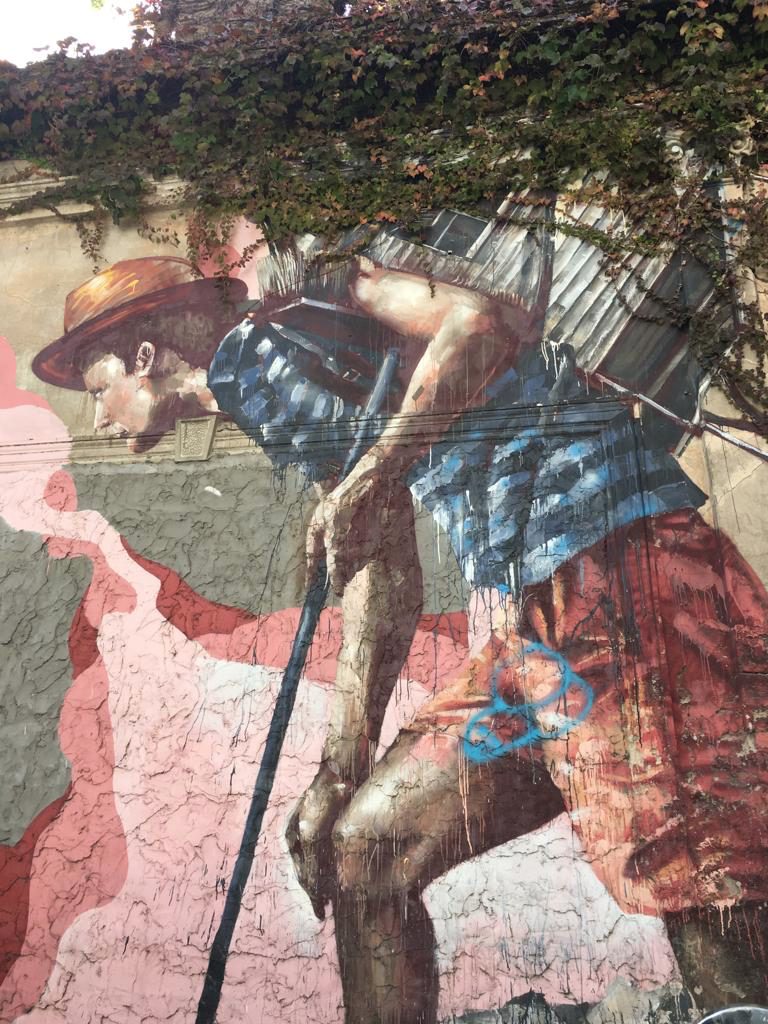
Our first week in Buenos Aires we went on a frankly disappointing street art tour. It was largely based on commercial aspects of street art and how it has been used as an advertising tool, rather than the politically active medium it was originally intended to be. However, this piece was one redeeming moment for the tour.

This piece is particularly exceptional because it actually conveys a message to the audience. The piece is painted on a house, tied up by inheritance issues, which the entrances had to be sealed off because of squatters staying illegally in the house.

The content of the piece means to evoke the gentrification crisis in Buenos Aires and world-wide. This piece can be found in Palermo SoHo, a formerly working class and bohemian neighborhood that, because of the fashion and touristic draw of such qualities, has now had the original artistic population driven out by increasing costs of living.

The man is meant to be one of these poor individuals pushed out by the gentrification crisis as he is carrying a traditional Australian home on his back. The location of Palermo SoHo combined with the Australian elements ties together the Australian artist’s personal experience with this issue with the global context of gentrification occurring in every artistic urban center on Earth right now.

This piece is particularly evocative because it is inherently temporal. The case of ownership of the house it is painted on will eventually be settled and the new owners will likely remove the mural. This again connects to the theme of true artistry being pushed out by commercial interests in areas of cultural depth and beauty.

Much emphasis has been put upon fostering artistic communities in urban centers, but the pitfalls are becoming more and more obvious. The more desirable Atlanta, Buenos Aires, Austin, or Toronto become because of their cultural wealth, the less authentic culture will actually be created. It is a difficult question because the beauty of most cities lie in their naturally developed culture and there is certainly a way to use this for economic development. Yet when the process is fully given over to market forces, there seems to be a clear fall off of the original artistic intent and population, defeating the original purpose of the development effort.

Journey by Foot

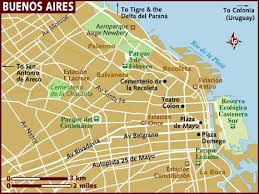
Today I went on an adventure that wouldn’t have been possible without the thorough walkability and ease of public transit within the city of Buenos Aires. I woke up at four P.M. (after a night of staying out until six A.M.) and decided I wanted to see a new part of the city, Puerto Madero. So, walked half a mile to the closest subway station and after a series of transfers arrived at the Constitucion subway station. From there, it was only a scenic twenty-minute walk to Puerto Madero. On this walk I went over a pedestrian walkway that weaved in between highway ramps and meandered down cobblestone streets to reach my destination, all without seeing another tourist. I arrived at Puerto Madero and immediately headed to the back end to walk along the river between the urban area and the massive ecological reserve while I watched the sunset. Along this path, there were sandwich venders ever ten feet and numerous entrepreneurs on bikes offering me cheap Fernet Branca and Coke. Eventually I turned to head back home, but not before stopping and grabbing a sandwich and a cortado while watching a soccer game. Then I walked on only one street the entire five miles up to Parque Centenario near my apartment. So many key features of Buenos Aires made this day possible and accessible to someone that is only a tourist in this giant city.

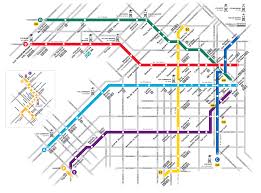
            The first aspect of the city that made this possible was the Subte system. Unlike Atlanta, Buenos Aires has a functioning and widespread public metro system. Through a series of transfers, I was able to make it to an entirely new part of the city that would be totally inaccessible to me except through a considerably more expensive taxi ride.

            Secondly, the emphasis on walkability in Buenos Aires made it possible for me to weave through busy highways on an elevated walkway. Throughout the entire city there are consistent and heavily used, though not exactly uniform, sidewalks. There is also a large emphasis on the construction of pedestrian walkways where cars aren’t allowed to go. All this simply means that Buenos Aires prioritizes their walking residents and tourists.

Image result for buenos aires sidewalk

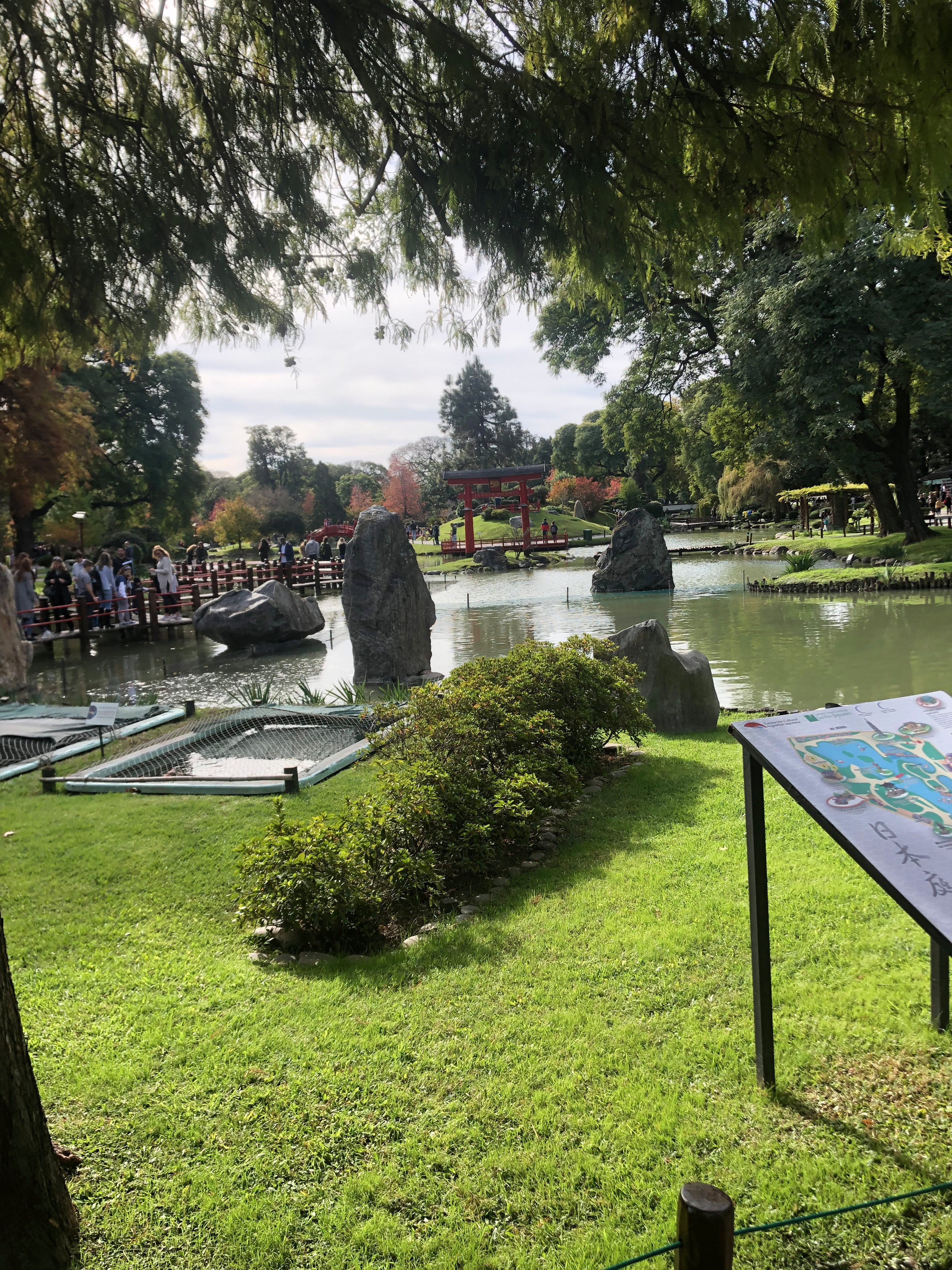
            Buenos Aires has countless public green spaces, parks and even an ecological reserve. I was lucky enough to walk alongside this ecological reserve during my adventure and it was beautiful. There are numerous studies on the benefits of public green spaces and Buenos Aires has not neglected to create as many of these as possible. From Parque Centenario, to the Japanese Gardens, to the Parque 3 de Febrero, there is always a nearby park to go and enjoy some natural beauty on your day off.

            Lastly, as an Atlanta native, the seemingly unusual and logical setup of the city was much appreciated by me. There are a series of avenues going towards the river that alternate in traffic direction. These avenues successfully divide the city into sections, as well as provide the template for the Subte, since most of the lines closely follow an avenue. In between the avenues, there is a very consistent grid system with lines generally parallel or perpendicular to the avenues. All of this made it very easy for me to walk the five miles back to our hotel at the end of my adventure.

Unity and Hatred

In a conversation with one of our program coordinators, David, he regaled me with a story of his travels in Eastern Europe. He mentioned a night when him and some of his other Argentine friends went into a bar and, after talking football with some of the patrons of the bar, found themselves in a highly tense situation on the verge of physical conflict. A much larger group of men were threatening to fight them over a simple rivalry in a sport they didn’t even play in any professional matter! Then, suddenly after realizing a player from the Argentinians team actually had gone on to be a star player on the European’s team, the conflict quickly shifted into a moment of comradery and a night of drinking and friendly conversation (obviously abounding with the topic of football). This anecdote illustrates the power of football culture to both unite and divide individuals from different backgrounds that might otherwise have little or nothing to relate or disagree upon.

            Football has the power to create enormous amounts of animosity between groups that have very little to actually disagree upon. For example, amongst the 50 plus different football clubs in Buenos Aires, there is a palpable and visible amount of hatred for rival clubs. Even our professor consistently receives distaste from River Plate fans for his support for their rival, Boca Juniors. Sadly, the hatred often precipitates into violence and Argentine teams have compensated for this by banning visiting teams’ fans from attending games. There are numerous stories of rival fans coming to blows over the outcome of a match or a debated penalty and the only feasible solution has been to remove rival fans from the gameday equation.

            Alternatively, football can often be a force of unifying good in the world, strengthening pre-existing communities or bringing together people from different backgrounds. The strongest vehicle of community strengthening tends to be the social clubs centered around football teams. A great example of this was the Gimnasia social club we went to see this past weekend. The social club is a non-profit organization that members or socios pay monthly fees to be a part of. This membership entitles them to gameday tickets, reduced fees on other services the club offers, voting rights for the board of directors in a club, and the status as part-owner of the club. Socios tend to be huge fans, participate in civil society together through the medium of their clubs, enroll themselves and family members in club sports (of which there are over 25), and provide a meeting grounds for the exchange of ideas at club events. All of this combines into an overall strengthening of the communities that form these social clubs. Furthermore, soccer can bond people even of completely different backgrounds. For example, when a national team is formed during the World Cup or a Copa America tournament, people who were once enemies suddenly become unified against other nations, rather than focusing on club team rivalries.

            Alternatively, football can often be a force of unifying good in the world, strengthening pre-existing communities or bringing together people from different backgrounds. The strongest vehicle of community strengthening tends to be the social clubs centered around football teams. A great example of this was the Gimnasia social club we went to see this past weekend. The social club is a non-profit organization that members or socios pay monthly fees to be a part of. This membership entitles them to gameday tickets, reduced fees on other services the club offers, voting rights for the board of directors in a club, and the status as part-owner of the club. Socios tend to be huge fans, participate in civil society together through the medium of their clubs, enroll themselves and family members in club sports (of which there are over 25), and provide a meeting grounds for the exchange of ideas at club events. All of this combines into an overall strengthening of the communities that form these social clubs. Furthermore, soccer can bond people even of completely different backgrounds. For example, when a national team is formed during the World Cup or a Copa America tournament, people who were once enemies suddenly become unified against other nations, rather than focusing on club team rivalries.

What Makes Argentines so Active?

Source: http://lasa.international.pitt.edu/LARR/prot/fulltext/vol42no2/Klesner.pdf

            Argentina has been singled out as a region of particular political activism worldwide, and especially when compared with its neighbors in Latin America. This article cites the increased activity with a higher presence of civil society groups, a type of group that has been linked to increased political action. In this blog post, I will assess the findings of this article, and then compare it to my specific experience in Argentina and specifically Buenos Aires.  

            This study makes an effort to prove Robert Putnam’s assertion that a high level of social capital has a causal and correlative relationship with strong democratic participation. This study used the World Values Survey (1999-2001) to analyze the level of non-electoral political participation (including willingness to or ever having participated in political protests, strikes, occupation of building, and several other testers of political activism), focusing on Mexico, Argentina, Peru, and Chile. Ultimately, the study finds that higher political participation can be witnessed in demographics that participate in volunteerism based civil society groups, though a correlation does not result when viewing merely participatory social and recreational type groups, such as sports or work based networking.

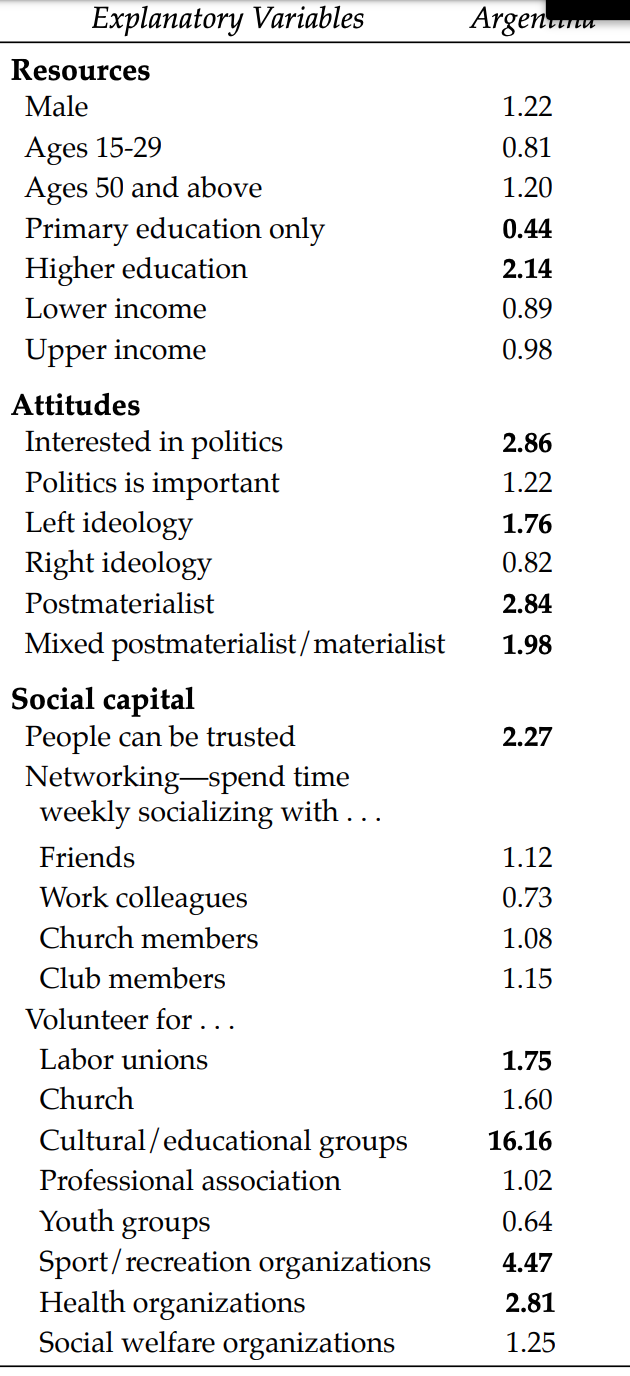
            While the conclusions of the study are somewhat mixed, if an isolated examination is made of Argentina, the study soundly confirms Putnam’s theory. The table below lists a number of demographics and their respective scores based on levels of political participation. Some points of interest to me are a quadrupling of score from primary education to higher level education and relatively higher scores amongst labor unions, self-identified “post materialists”, members of cultural/educational groups, and sport/recreational organizations. Firstly, In my time in Buenos Aires, I have definitely noticed and heard about a significant presence of politically active university students. This confirms a well-established hypothesis that higher education leads to increased political involvement, as well as my own experience of growing more politically galvanized as I’ve attained higher levels of education. Next, Argentina is notorious for its extremely active and politically powerful labor unions, and my time here has only confirmed this. During our second week in the country, the CGT hosted a general strike to decry the economic policies of President Macri. The long history of labor unions in Argentina, and the anomaly of the absence of laws prohibiting their perpetuity, even if paused during non-democratic years, has cemented their power and relevance, particularly within the political-cultural movement of Peronism. Having such a long-standing and cemented historical precedent for the existence of and participation of labor unions in the political process has helped ensure significant access of organized labor in the political process, dating back to the gains made during the Peron era of the 1940’s. Thirdly, a portion of our class-time on this study abroad has been spent discussing the merits and results of the global adoption of post-materialist ideology, particularly amongst younger generations. Throughout the twentieth century, the dominant motivator throughout the western world was the accumulation of capital, as any good capitalist would, in the pursuit of ever heightened quality of life. However, in recent years the ultimate goal of capital accumulation has been decried within more progressive circles, in favor of the prioritization of non-material accomplishments, like fulfillment, equality, pursuit of passions, and artistic merit. Replacing the constant effort working to heighten a standard of living both frees up time to be politically active and the ideology tends to promote the ideals progressive political participation often fights for, certainly in Argentina. Finally, the political ramifications of participating in either a recreational/sport or a cultural/educational group are quite logical in a country like Argentina. Argentina both has a long history of political oppression, as well as an extremely powerful and locally organized system of sports-based participation in the form of socio and hooligan groups. A number of groups based on the raising of awareness regarding human rights abuses of the dictatorship of the 1970’s and 80’s would naturally have numerous political ramifications in society. Groups like the Abuelos de la Plaza de Mayo or the Madres de los Desaperecidos who serve the dual function of participating politically while raising awareness and ideally preventing repetitions of the political abuses of the dictatorship have had a clear effect on the political landscape of Argentina. Furthermore, sports-based groups are deeply organized and participatory actors in Buenos Aires, with over 50 football clubs, each with an extremely active and passionate groups of fans. The framework of these groups lends itself quite easily0 to the political process, as they share many similarities, like tightly knit bonds, accomplishment of shared goals, and clear means of communication. Someone who is an active participant in a group like these could easily form or participate in a politically participative group.

Development Blog Post 4

Development Blog Post 4

            In this tumultuous year for the Argentine economy and political system, strikes stemming from the massive labor organization, CGT, are further exacerbating the political stress of the Macri government. Before I can justify the decisions of the CGT, I think it is important to clarify the problems they are claiming to be protesting, and what I believe the ultimate goals of the strike are.

            Macri’s policies mark a shift back to the neoliberal practices of the 80’s and 90’s in Argentina. These policies generally entail three concepts, privatization of previously government owned enterprises, deregulation of the economy and/or austerity measures, and liberalization of the economy through reduction of trade barriers. Macri has most infamously committed to austerity measures, cutting state education and medical budgets by approximately thirty percent. This, while certainly aligned with his political ideology, stems from another of his controversial policies; the largest ever loan from the IMF being given to the Macri administration. Loans from the IMF come with strings attached, call structural adjustment programs that call for drastic austerity measures to reduce the federal deficit. These policies have been extremely controversial in a country in which much of the population has condemned the IMF as the hand of the devil. This is not an unreasonable conclusion considering the IMF’s generally poor track record with the countries receiving “assistance” actually faring worse than those who do not. Regarding privatization, Macri has yet to commit to any privatizations, but his speech has certainly alluded to the possibility of its occurrence. Following the state-owned Aerolíneas strike, Macri’s comments about the “unfairness” of tax-payer money going to a company that only 4% of the population can take advantage off certainly allude to his support for the concept of privatization. Though, the terrible reputation of the Menem era privatizations will likely inhibit repetitions of these policies. Third, Macri has been a powerful proponent of liberalizing Argentina’s position within the global economy. He has vigorously fought for the adoption of a free trade area within MERCOSUR and has only been halted by the legislature that his party lacks power in. So, all in all, Macri’s economic policy fits squarely into the neoliberal box. On top of all of Macri’s efforts to govern an economically tumultuous nation are massive inflation rates, reducing investor confidence and eviscerating the savings of millions of Argentines. However, are the strikes instigate by the CGT actually going to fix such problems?

            The CGT has called for a series of general strikes in areas ranging from transportation to education in protest of Macri’s neoliberal agenda. In my opinion, these strikes are only going to worsen the situation in Argentina. They will both decrease productivity and significantly reduce investor confidence, driving capital out of Argentina and into more investor friendly nations, like Chile. However, I believe that the CGT is fully aware that their actions will only serve to worsen Argentina’s economic state, in fact this is likely their precise motivation. If the nation’s economy worsens under Macri’s regime, it will significantly reduce his likelihood of reelection and increase the strength of the Fernandez-Kirchener ballot. Kirchenerism is an ideology of Peronist origins that is significantly friendlier to the labor movement. Under the Kircheners, Argentina saw significant strength given to the labor movement, advanced social welfare programs, and significant protection of Argentinean industry from the global market, all of which are extremely friendly policies to the CGT. So, while I can’t say I think the strikes are going to do anything to help the Argentinean economy in the short term, I can say that it is an extremely intelligent move on the part of the CGT and will likely lead to the achievement of their goals. On this study abroad, I have been thinking a lot about the role of politics. I used to believe it was more about having a sound and ethical ideology that stands true in every circumstance, however now I see more and more that it is a means to an end. Politics are not about always being in the right, because this is impossible. Politics are about maximizing the good you do and minimizing your negative impact. The CGT believe that Kirchenerism will help achieve their goals, so ultimately, they are striking to worsen the economy, and Macri’s political appearance. As a barely informed outsider, it is extremely difficult to say whether or not this will yield better results than if they chose not to strike, but I can agree that it will have the desired effect.

Development Blog Post 3

Development Blog Post 3

            In a world of increasingly advanced information technology, new applications can yield substantive added-value to products and economies previously subjected to the infamous resource curse. Uruguay’s adoption of high-tech tracking in their beef and cattle industry illustrates the ability of developing nations to use emerging information to their advantage.

            Companies and economies that focus on production of raw material type resources, like agricultural goods or minerals have consistently been subjected to the rise and fall of prices as a result of shifts in resource demand. Because of the relatively low profit margins on such goods, these actors are consistently subjected to periods of loss and periods of extremely high profit, however these periods of loss can be exceedingly disastrous and lead to defaulting on loans and periods of extreme economic stagnation. Uruguay’s economy relies heavily on the import and domestic consumption of beef and other cattle-based products, an economic activity that falls prey to this resource curse. The prices of beef are subject to international markets and should something happen across the world to adjust the prices of beef, such as an emerging cattle market in another country or an increase in agricultural subsidies in one of Uruguay’s primary markets, Uruguay’s economy is likely to see a significant dip. Uruguay has devised a technologically sophisticated solution to this historic problem; Ironically, as a result of an outbreak of a food-borne illness in Uruguayan beef.

            In 2001, an epidemic of foot and mouth disease initiated a massive recall and halt on Uruguayan beef exports. While temporarily a massive blow the Uruguayan economy, this crisis turned out to be the key to alleviating Uruguay’s historic economic fragility. In response to this crisis, Uruguay began work on a collaborative effort between cattle ranchers and distributors in Uruguay to develop a complex system of block-chain based computer tracking for each piece of beef. The program is both legally mandated and fully financially supported by the Uruguayan government, though strong collaboration and coordination within the cattle industry has played an important part in its successful implementation. Through this system, each cut of beef sold domestically and abroad can be traced back both to its farm of origin and the individual cow it was taken from. Should an outbreak be detected, the cattle industry can quickly identify the point of origin and quarantine a much smaller section of the cattle economy, in addition to decreasing the lag time in production following detection of a food-borne illness. Furthermore, this system significantly increases accountability of individual cattle producers, as their culpability can quickly be identified in the midst of an epidemic.

While this clearly assists Uruguay in reducing the frequency of and fallout resulting from food-borne illnesses, a second and potentially more valuable benefit is gained from this technology. By being a world leader in beef traceability, Uruguayan beef can be priced higher due to the perceived safety associated with its consumption as well as the potential branding possibilities in a culinary world of ever-growing farm-to-table emphasis. This added value gives the Uruguayan economy an added cushion in times of reduced beef demand, as a much higher reduction in price point is needed to precipitate economic losses. Uruguay, a consistently progressive and pioneering country, has demonstrated its adaptability and creativity once again through their application of a new model for adding value to a traditionally vulnerable product.

Development Blog Post 2

Development Blog Post 2

            In the discourse of developmental economy there has often been a stark divide between those who promote a hands-off neoliberal model promoting a free market with little governmental intervention that should ideally cause a trickle-down effect of economic growth and an interventionist model that emphasizes industrial policies like ISI and subsidies for infant industries within the state while enacting state policies to distribute economic gains. Alternatively, Uruguay’s successful developmental model has demonstrated that the two are not mutually exclusive. Uruguay has created an environment ideal for foreign investment while emphasizing fair distribution of wealth and development of domestic industry and entrepreneurship.

            The Uruguayan state has made various efforts to grow the private sector of Uruguay, without resorting to isolationist policies like the ISI utilized in Argentina. Montevideo, often referred to as “the Silicon Valley of South America” has a massive presence of IT firms whose total value amounts to over $1.2 billion dollars. This is owed to, similar to the case in the actual Silicon Valley, government subsidies that promote the expansion of the industry. The most attractive subsidy is the 100% tax exempt status on IT export profits that Uruguayan firms receive. Furthermore, government investment in education, for example the fully completed one laptop per child initiative, has been wildly successful in promoting the development of the human capital required for value added industry like IT. Investment in public education and promotion of cooperative workspaces through the completely free public university system are extremely conducive to domestic entrepreneurship. All of these factors have made Uruguay extremely attractive to foreign investment and domestic industry, without creating an environment threatened by capital flight to other more economically friendly countries. Impressively, all of this has been done without resorting to policies of austerity that strip social benefits from Uruguayan citizens.

            Uruguay is one of the most successful and advanced welfare states in the world, dating back to the two terms of president Batlle in 1903 and 1911. Batlle pioneered many socially and economically progressive policies such as the legalization of abortion and divorce as well as the appropriation of many private industries including the official bank of Uruguay. Batlle believed in the equal distribution of wealth and the duty of the stake as a caretake of all social classes, this philosophy has been ingrained in Uruguayan politics and is responsible for the high level of human development present in the country to this day. Modern day Uruguay allocates 25% of its GDP and 80% of its government spending towards social welfare programs. Education, medical care, and pensions are all provided through government funded programs. Furthermore, Uruguay has made efforts in recent years to revolutionize the systems that provide these programs, utilizing advanced information technologies to link together systems of welfare provision, defying the image of the welfare state as a bogged down and aging bureaucratic beast. These programs have been extremely successfully, with Uruguay’s literacy, unemployment, education, and equality rates being among the lowest for all of Latin America and much of the world.

Development Blog Post 1

Development Blog Post 1

            Argentina and Uruguay are somewhat of developmental anomalies when compared with the rest of Latin America. Their uniquely decentralized positions in the colonial economic landscape during Spanish rule allowed them to develop far more independent trade-based economies. This, combined with progressive socio-political policies during the twentieth century, has pushed them to the forefront of Latin American Development. In this blog post I will analyze Argentina and Uruguay’s economic as well as human development both in reference to each other and the rest of Latin America.

            At the start of the twentieth century, Argentina was on a course to become a global economic power. Argentina’s massive beef export industry and the ideal global port of Buenos Aires had allowed it to begin the process of industrialization quite early in their history. However, this very advantage ended up contributing to Argentina’s ultimately disappointing economic growth. Because of the success and fertility of Argentina’s agricultural sector, the ruling class decided not to invest in new forms of value-added manufacturing, preferring g instead to reinvest in the high performing agricultural sector that maintained the status quote of their dominance. We see this phenomenon reflected in Argentina’s current economic data. Argentina has the 28th highest GDP in the world at $922 billion dollars as of 2017 but the 88th highest GDP per capita globally at $20,900 at the same time of measurement. This reflects a large overall economy, but one where the wealth is highly concentrated in the upper tier economic classes. This can be witnessed in Argentina’s Gini index measure of 41.7, the 54th highest in the world. Argentina is currently in the midst of a significant economic crisis with annual inflation rates of a shocking 50%, 70% interest rates crushing investment prospects and precipitating bankruptcy, and constant layoffs and factory closures continuously damaging prospects of recovery.

            Uruguay, on the other hand, has managed to finally decouple itself from the recently plummeting economies of Argentina and Brazil. Uruguay has historically been a country dependent on the financial success of these two powerhouse neighbors to their north and west, exporting beef, dairy products, and other raw agricultural goods. In recent years, Uruguay has made efforts to both diversify their economy by moving into value added good production, like manufactured dairy products and electronically traceable beef, as well as expanding their diversity of trading partners to reduce their dependency on their giant neighbors. Because of this, Uruguay’s economic development has continued to rise over the past twenty years, despite the Chinese encouraged resource boom of 2000-2010 coming to an end. Uruguay’s total GDP is $78 billion, much smaller than Argentina’s, however it is a country with a much smaller population. Uruguay’s economic figures of equality are fairly similar to Argentina’s, with a GDP per capita of $22,400 and a Gini index score of 39.5, both reflecting a slightly more egalitarian society than Argentina. This is quite impressive considering Uruguay’s much smaller population and historically lower levels of industrialization.

            In comparison to the rest of Latin America, Uruguay and Argentina have two of the lowest GINI scores in a region considered one of the most inegalitarian in the world. However, the gap has been closing over the last twenty years, with other nations in the region making significant gains in equality while these two nations have only marginally decreased their levels of inequality. In general, the average GDP is $187 billion in Latin America, with Argentina significantly exceeding this and Uruguay producing about half of this figure, though this measurement varies significantly based on the population of a country. In Latina America, the average GDP per capita is about $8300, which both Argentina and Uruguay significantly exceed. In general, Uruguay and Argentina are outperforming the rest of Latin America in terms of both raw economic production and in their levels of inequality.

            Another highly valued measure of development in a nation is the measure of human development in a country. Human development is a scale derived from average life expectancy, average levels of education at different ages, and GNI per capita. Argentina’s HDI, according the UN Human Development Report, is .825, while Uruguay’s in .804, ranking 47th and 55th in the world, respectively. Argentina is slightly ahead of Uruguay; however, it is worth noting that the rate of Uruguay’s progress in this measure has been significantly higher than Argentina’s in recent years, reflecting Uruguay’s recent economic and social successes. In 2014, Latin America and the Caribbean held an average HDI of .74, once again reflecting Uruguay and Argentina’s relative developmental superiority in the region in general and specifically in the field of Human Development.

            Argentina and Uruguay have consistently demonstrated their status as economic and social frontrunners in Latin America, a phenomenon that many scholars attribute to their economic and governmental distance from colonial powers during Latin America’s colonization. Path dependencies like these can often explain varying levels of development in the world, however Argentina’s recent economic failures demonstrate that all is not set in stone. Developing economies should bear witnesses to the successes and failures of both of these nations that are somewhat further down their paths of development than the rest of Latin America and attempt to improve on failures and emulate successes.